
The Life I Planned — And the One That Found Me
Written by: Breck Schubb
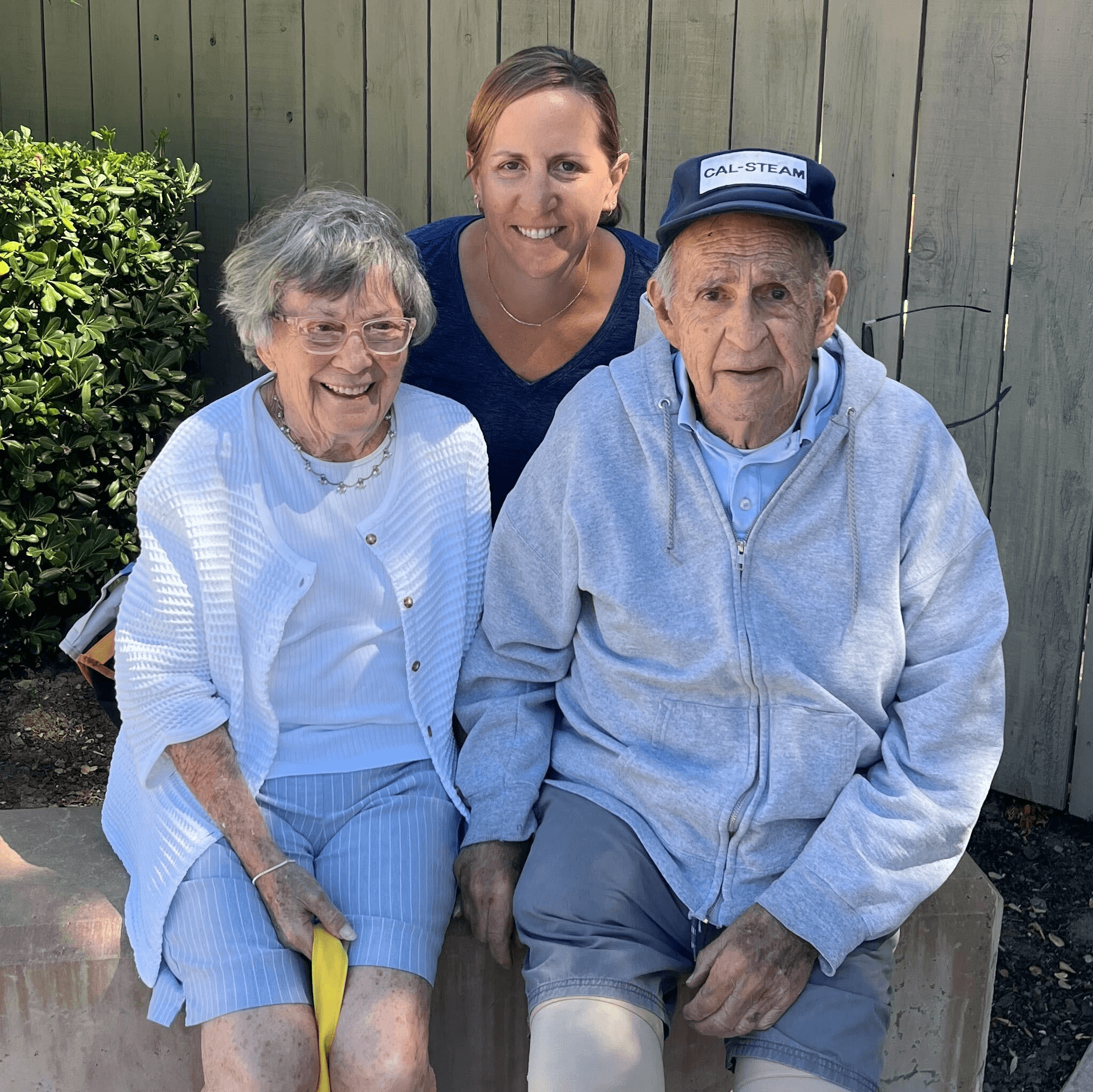
Five years ago, caregiving wasn't part of my identity — it was something other people did. I had a plan: a career in physical therapy, a flexible schedule, and time to be a present, hands-on mom to my two kids.
If you had asked me then what a caregiver was, I would have given you a dictionary definition.
If you ask me today, my answer is simple: Me.
A Life Built on Care
Looking back, I think caring for people was always the thread running through my life. I was the one who noticed when someone was having a hard day. The one who stayed after everyone else had moved on. It wasn't something I decided to be — it was just how I was wired.
So when it came time to choose a career, physical therapy wasn't a random pick. It was the clearest expression of what I already knew about myself: I wanted to help people heal.
I earned my Doctor of Physical Therapy — years of graduate school, clinical rotations, and more anatomy than I care to remember. It was hard. It was worth it. And it opened the door to work that I found deeply meaningful.
I chose home health because it gave me the flexibility to stay in clinical practice while being present for my kids. And within that world, I found my niche: neurological rehabilitation. I worked with patients recovering from traumatic brain injuries, strokes, and other conditions that affected how the brain communicates with the body. It's humbling work. You learn quickly that recovery isn't linear, that patience matters more than technique, and that the person sitting across from you is so much more than their diagnosis.
I built a career I was proud of — one that honored both the clinician in me and the mom. I had the life I planned.
Until the pandemic changed everything.
The Role That Found Me
When the world shut down in 2020, I stepped away from clinical work to support my children at home. Like a lot of parents, I thought it would be temporary. Like a lot of parents, I was wrong about how much would shift.
As life slowly reopened, I began exploring what was next. And somewhere in that transition, I reconnected with a former patient — Lou, someone I had treated years earlier.
What started as occasional check-ins became something more.
Lou and his wife Kath were both living with dementia, though in different ways and at different stages. For a long time, they lived independently, with their daughter stepping in to help whenever needed. As their needs grew, and as their daughter took on the responsibility of caring for both her parents and her grandchildren, additional support became necessary. That’s when I stepped in, becoming a steady presence each morning—someone who knew their routines, anticipated needs, and could read the room when things began to shift.
Five mornings a week, I was there. Medications. Meals. Exercises. Appointments. Advocacy. I helped manage the flow of caregivers in and out of their home, and I became someone Lou trusted — especially during his hardest moments, when anxiety or confusion would take hold and he needed a calm voice and a familiar face.
I didn't set out to become a caregiver. But caregiving found me. And what surprised me most wasn't the workload or the logistics.
It was how deeply I came to care.
A Familiar Voice
Here's where the story takes a turn I didn't see coming.
I've known Matt Tullis most of my life. I'm the younger sister of one of his best friends — they go back to third grade — and we all grew up together in the same community. So when Matt started telling me about something he was building called Vallige, I wasn't hearing a pitch. I was hearing a friend describe a problem I was living inside of every single day.
Matt had built Vallige for his own family first — for his mom, who is living with dementia. But he wanted to know if it could help other families too. And he asked if Lou and Kath might want to try it.
They became one of the first families outside of Matt's own to use Vallige.
We started with Moodshifters — these are personalized poems created from the details of someone's life, read aloud in a voice they know and trust, accompanied by photos of the people they love. For Lou, the poems drew on his family, his memories, the things that mattered most to him. And the voices reading them were ones he recognized — his daughter's voice, and mine.
The first time we played one for him, something shifted. He got quiet. He listened. His face softened.
It worked.
When Nothing Else Could Reach Him
As Lou reached the final chapter of his life, there were moments when things felt a little harder for him. Some days brought more confusion or anxiety than others. The tools that had once helped—a gentle redirect, a favorite show, a familiar song—didn’t always have the same effect.
Toward the end, Lou was on hospice. If you’ve been around someone in that stage of life, you know how the world begins to narrow. The moments that matter become more specific, and you hold on to anything that brings even a few minutes of comfort.
The Moodshifters became one of the most reliable ways to reach him.
Even on the days when he felt unsettled or harder to redirect, hearing a familiar voice reading a poem about his family could bring a sense of calm. It helped ground him and bring him somewhere familiar and safe.
I watched it happen over and over again in those final weeks. And every time, I thought: this is real. This matters.
The Poems at the Service
Lou passed just 2 weeks before his 94th birthday.
I don't know how to describe what that felt like, except to say it felt like losing family. Because that's what he had become to me — not a client, not a patient, but someone I loved.
That's the part of caregiving we don't talk about enough: the grief. Compassion is what makes you good at this work. But compassion also means your heart breaks when the journey ends. You can't care deeply and walk away cleanly. It doesn't work that way.
After Lou passed, his family asked me to do something that I will carry with me for the rest of my life. They asked me to read those same poems — the Moodshifters we had played for him so many times — at his burial service.
I stood up to read them.
I made it through the first poem, but I couldn't finish the second one.
The emotion hit me harder than I expected — not just the grief of losing Lou, but the weight of everything those poems represented. The hours I had spent by his side. The promise I had made to him that I would take care of Kath. The realization that these words, generated by technology but rooted in a lifetime of love, had become one of the most sacred things in this family's story.
I understood something clearly in that moment:
What we are building matters.
A Promise I Intend to Keep
Even now, I still care for Kath five days a week.
Somewhere along the way, I made a promise—to Lou, to Kath, to myself—that I would be there. Not alone, but as part of the circle of family and caregivers surrounding her, making sure she would not navigate this next chapter on her own.
I intend to keep it.
Where I Landed
After seeing what Vallige could do firsthand — not in a meeting, not on a screen, but in the life and death of someone I loved — I knew I couldn't just be a user. I wanted to help build it.
Matt brought me in as co-founder. My title is Chief Care Officer.
That title means something specific to me. It's not corporate language. It represents the people I see every day — the caregivers who show up, who manage medications and moods and impossible logistics, who pour themselves into this work because they can't imagine not doing it. And it represents something even simpler than that: the act of caring itself. The thing that holds all of this together.
Today, my life is care in every direction. I'm a caregiver for a 95-year-old woman, five mornings a week. I'm raising two kids. And I'm helping build a company that exists to support families walking the same road I walk every day.
I know what it feels like to be pulled in every direction at once. To love deeply in multiple places and wonder, some days, if you're giving enough to any of them. To feel the weight of promises you've made and responsibilities you've chosen and a to-do list that never ends.
If that sounds like your life — if you're a woman holding care together in more directions than anyone can see — I want you to know something:
I see you. Because I am you.
Five years ago, I had a plan. A career. A schedule that made sense. And then life handed me something I never expected — a role I didn't choose, a loss I didn't anticipate, and a mission I didn't know I was looking for.
Caregiving changed me. It showed me that sometimes the life you didn't plan is the one that leads you exactly where you're meant to be.